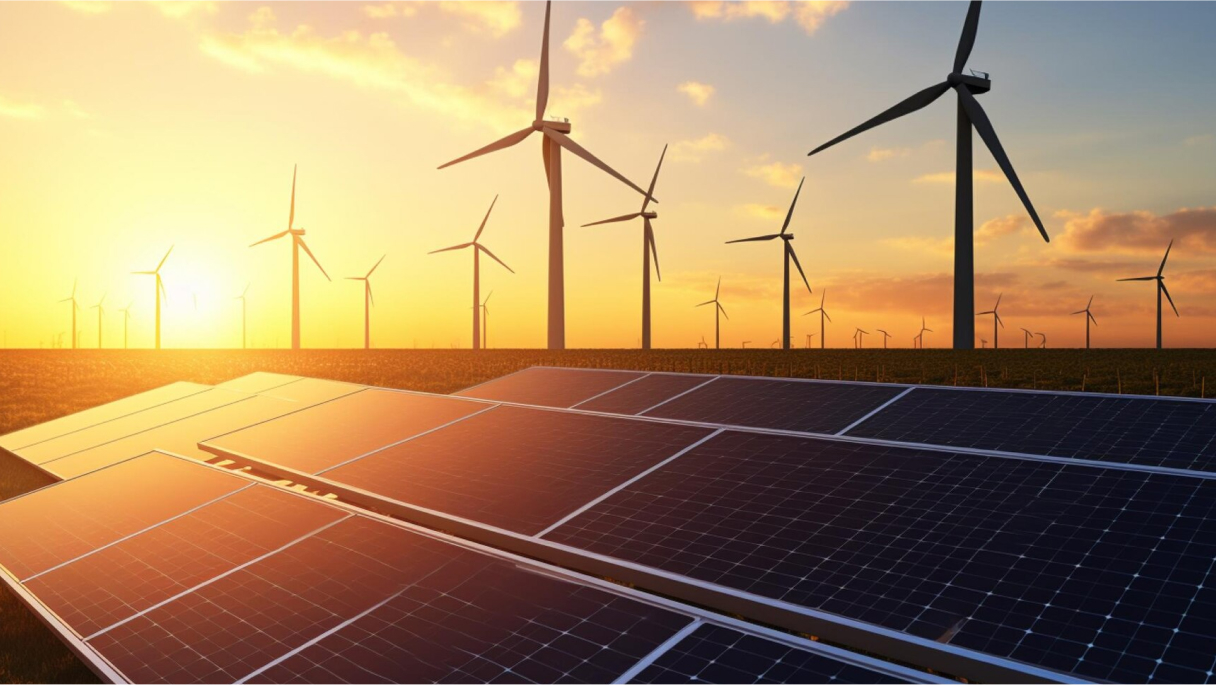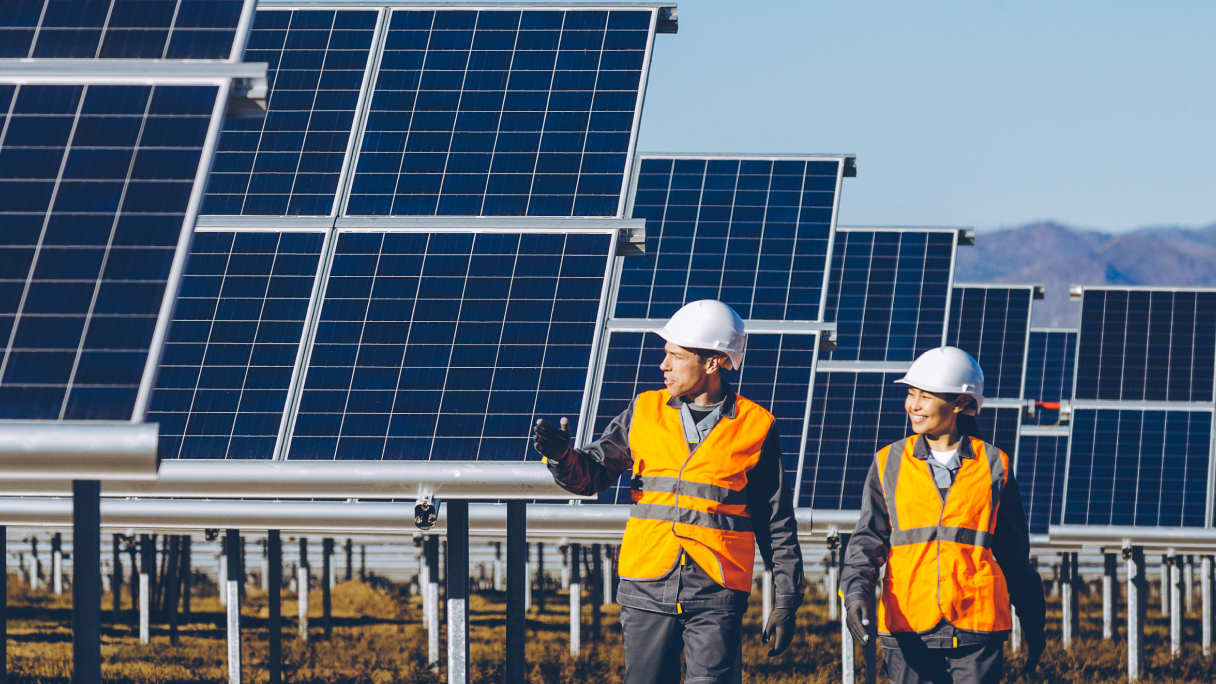
Energy self-production has always occupied an ambiguous space in the Brazilian electricity sector. While it has been presented as a legitimate instrument of economic efficiency, cost reduction, and risk mitigation for large consumers, over time it also came to be used as a mechanism of regulatory arbitrage, diluting charges and shifting costs onto the system as a whole. Law No. 15,269/2025, resulting from the conversion of Provisional Measure No. 1,304/2025, represents a clear inflection point in this landscape, as it conceptually redefines the self-producer and repositions self-production within a stricter logic of risk assumption, corporate alignment, and effective economic responsibility.
From the perspective of Economic Analysis of Law, this shift is revealing. The legislator moves away from a formalistic conception—predominantly based on the physical destination of the energy—and adopts a functional and economic approach centered on incentives, risks, and control structures. The self-producer is no longer merely the party that consumes energy from a project in which it participates; rather, it is explicitly the party that produces energy “at its own expense and risk,” internalizing the costs, uncertainties, and responsibilities inherent to generation activity. This is a classic regulatory move aimed at correcting incentives: by restricting access to the self-production regime, the legal framework seeks to reduce opportunistic behavior and align private decisions with the social cost of the system.
Prior to Law No. 15,269/2025, qualification as a self-producer allowed for highly flexible corporate structures, often marked by indirect, fragmented, or economically insignificant shareholdings. These arrangements enabled consumers to access tariff benefits and reduced charges without, in fact, assuming the economic risk of generation. From an Economic Analysis of Law standpoint, this design produced a clear asymmetry: rational agents maximized private utility by exploiting regulatory gaps, while a significant portion of systemic costs was socialized through charges such as the Energy Development Account (CDE). The outcome was a classic negative externality problem, in which decisions that were individually efficient proved collectively inefficient.
The new legal framework responds to this problem by imposing stricter criteria, including minimum demand requirements (30 MW aggregated, with individual units of at least 3 MW), clear requirements for equity participation with voting rights, and, in certain cases, a minimum 30% equity stake when non-voting shares carry predominant economic rights. These requirements shift the decision-making axis of self-production into the realm of corporate governance and real risk allocation, discouraging purely instrumental structures and demanding substantial and verifiable economic commitments.
From a behavioral perspective, the reform also addresses recurring biases observed in energy investment decisions. Previous structures encouraged excessive optimism and an illusion of control, as consumers believed they could capture regulatory benefits without proportional exposure to financial, regulatory, or operational risks. By raising entry barriers, the new regime forces more deliberative decision-making, reducing heuristic shortcuts and bringing economic agents closer to a realistic assessment of costs, returns, and uncertainties—an approach consistent with behavioral critiques of unlimited rationality.
Another central element is the interaction between self-production and the redefinition of the CDE. By establishing a cap on the account’s revenues and creating the Energy Resource Complement Charge (ECR), Law No. 15,269/2025 profoundly alters the predictability and intertemporal distribution of sector charges. For self-producers, this means that the decision to invest in own-generation can no longer be analyzed merely as a strategy for immediate bill reduction, but rather as a long-term structural choice involving regulatory projections, tariff rebalancing risks, and potential future reallocations of charges. Under the lens of Economic Analysis of Law, self-production becomes an infrastructure investment decision, not a simple regulatory hedge.
This new framework becomes even more relevant when combined with the regulation of energy storage. Law No. 15,269/2025 expressly recognizes storage as an autonomous economic activity subject to regulation by ANEEL, opening space for hybrid self-production models integrated with battery systems. Economically, this reshapes the efficient frontier of projects: self-production ceases to be merely a self-supply instrument and begins to incorporate value as an asset for flexibility, risk management, and contractual optimization. Once again, however, the legislator conditions these gains on the assumption of risk and compliance with regulatory criteria still under development, thereby avoiding the creation of new arbitrage shortcuts.
In summary, the reform introduced by Law No. 15,269/2025 does not eliminate self-production, nor does it discourage it. Instead, it repositions it. What emerges is a transition from an opportunistic self-production model to a structural one, anchored in robust investment decisions, consistent corporate governance, and the internalization of risks. From the perspective of Economic Analysis of Law, this represents a clear attempt to align private incentives with systemic efficiency, reduce externalities, mitigate undesirable strategic behavior, and promote a more rational use of resources in the electricity sector.
For entrepreneurs and large consumers, the message is unequivocal: self-producing energy is now less about exploiting regulatory loopholes and more about consciously and informatively deciding whether it makes sense to assume the economic role of a generator. In an increasingly open, competitive, and sophisticated market, self-production ceases to be a shortcut and becomes a long-term strategic choice—precisely the kind of decision that demands less intuition and more institutional rationality.